
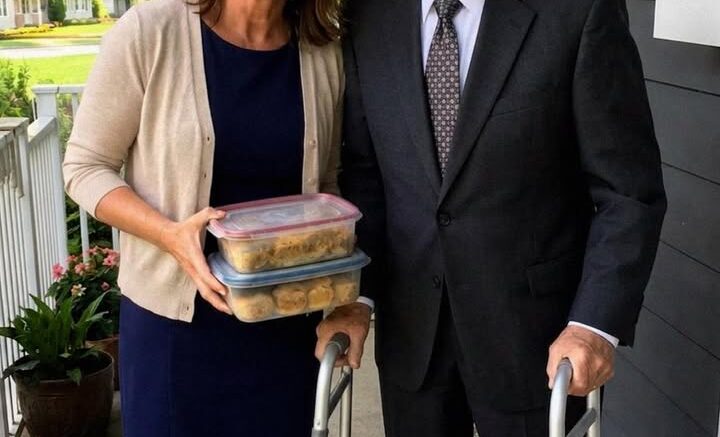
At forty-eight, life felt like a collection of broken fragments. Newly divorced and navigating the complexities of raising two children on my own, I moved into a modest house in a quiet, tree-lined neighborhood, seeking nothing more than a fresh start and a sliver of peace. The house next door was equally unassuming, inhabited by an elderly man named Lawrence who seemed to blend into the very architecture of the street.
Lawrence was a man of few words and even fewer visitors. He possessed that particular brand of stoic independence common to his generation, a quiet insistence that he was perfectly capable of managing his own affairs, even as his gait grew slower and his shoulders more stooped. For the first few months, our interactions were limited to polite nods over the fence and brief comments about the weather.
Our friendship did not begin with a grand gesture, but rather out of a growing sense of concern. It was a biting winter afternoon when I noticed his mailbox was overflowing, the lids of the envelopes dusted with a fresh layer of snow. Fearing he might be ill or injured, I gathered the mail and knocked on his heavy oak door, my breath hitching in the frigid air.
When he finally answered, he looked frail, his eyes clouded with a fatigue that went deeper than mere physical exhaustion. He admitted, with a touch of reluctant embarrassment, that he hadn’t been feeling well enough to make his usual trip to the pharmacy. Without a second thought, I took his prescription and drove to the store, returning an hour later with his medicine and a sense of purpose I hadn’t felt in years.
A few days later, I returned with a container of homemade chicken soup, thinking he might still be too weak to cook. I left it on his porch with a small note, not wanting to intrude on his privacy. To my surprise, the next day I found the empty container on my own doorstep, meticulously cleaned, with a sprig of dried lavender tucked inside as a silent thank you.
What began as a singular act of neighborly duty slowly transformed into a rhythm that defined my next nine years. It became a subconscious habit; every time I prepared dinner for my children, I would set aside a generous portion for Lawrence. I began to coordinate my grocery runs with his needs, ensuring his pantry was never bare and his medicine cabinet was always stocked.
Lawrence was a proud man, and in the beginning, he frequently attempted to reimburse me for the expenses. He would reach for his worn leather wallet with trembling hands, offering crumpled bills that I gently pushed away. Eventually, he stopped trying to pay with money and began to pay with the only currency he had left: his stories and his time.
Over countless cups of tea and shared meals, a deep and unbreakable bond developed between us. He became a surrogate grandfather to my children and a steady, grounding presence in my own life. Through his stories, I learned about the life he had lived before the silence of old age took over—the vibrant woman he had loved and lost, and the son from whom he had long been estranged.
He spoke of his late wife, Martha, with a reverence that made her feel alive in the room with us. He described the way she laughed and the specific shade of blue she wore on their wedding day. However, when the topic turned to his son, his voice would drop to a somber whisper, heavy with the weight of unresolved regrets and years of distance that neither knew how to bridge.
I never considered my actions to be extraordinary or heroic. To me, supporting a neighbor who had become a friend was simply the natural course of a life lived with empathy. It was a quiet service, performed in the margins of my own busy days, requiring nothing more than a little extra time and a surplus of heart.
Time, however, is the one thing we cannot negotiate. Lawrence passed away recently, slipping away peacefully in his sleep within the home he had occupied for over fifty years. The neighborhood felt suddenly hollow, the house next door standing as a silent monument to a man who had become an integral part of my family’s story.
The funeral was a small, dignified affair, attended by a few distant relatives and the neighbors who had known him in passing. As the service concluded and I prepared to leave, a man in a sharp charcoal suit approached me. He introduced himself as Lawrence’s attorney and handed me a thick, cream-colored envelope with my name written in Lawrence’s unmistakable, shaky script.
Be the first to comment on "The Legacy of the Neighbor’s Freezer: A Nine-Year Kindness Returned"