
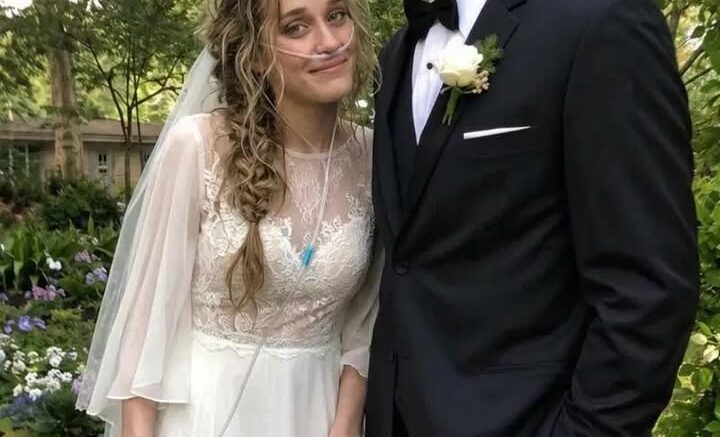
For nearly a year, my life was a whirlwind of white lace, floral arrangements, and the sweet anticipation of a forever that felt guaranteed. My fiancé and I had meticulously planned every detail of our wedding, from the hand-lettered place cards to the specific vintage of champagne we would toast with. My father, beaming with pride, had already settled the accounts for the venue, the catering for one hundred and twenty guests, and the elaborate floral arches that were meant to frame our future.
Invitations had been dispatched across the country, relatives had secured their flights, and my mother had shed tears of joy during my final dress fitting. I felt like the protagonist of a fairytale, untouchable and deeply loved. The world was vibrant, colored by the promise of a long life shared with the man I thought was my soulmate.
Then, the silence of a sterile consultation room shattered that reality. The doctor spoke a single word that split my life into two distinct eras: before and after. The word was “terminal.” It hung in the air like a heavy, suffocating fog, turning the bright colors of my wedding dreams into a stark, monochromatic landscape of fear.
I remember sitting in that cold, white room, my vision blurring as I gripped my fiancé’s hand. I squeezed so hard my fingers ached, expecting—needing—him to hold on tighter, to be the anchor that kept me from drifting into the abyss. I looked at him, searching for a reflection of the strength I lacked in that moment.
Instead, I saw a flicker of something terrifying in his eyes: retreat. Two days later, the man who had promised to love me in sickness and in health stood in our kitchen with bloodshot eyes and a suitcase parked by the door. The familiar scent of coffee was replaced by the cold, sharp air of abandonment.
“I’m sorry,” he whispered, his voice trembling not with grief for me, but with a desperate need for self-preservation. “I just can’t do this.” He didn’t look at me as he said it. He looked at the floor, at the bag, at the exit—anywhere but into the eyes of the woman he was leaving behind.
At first, my mind tried to protect me. I thought he meant he couldn’t handle the diagnosis, that the weight of the medical jargon and the hospital visits was simply too much for him to process in such a short time. I thought he needed a moment to breathe before returning to my side.
Then, as the door clicked shut, the realization hit me with the force of a physical blow. He didn’t mean the illness was too much. He meant that I was too much. I had become a liability, a tragedy in progress that he didn’t want to be a part of.
He left before the ceremony, before the symptoms worsened, and before I became a burden he wasn’t willing to carry. Suddenly, I was a dying woman with a pristine wedding dress hanging in the closet, a fully paid venue waiting for a celebration, and a gaping hole where a groom should have been.
To many, the logical step would have been to cancel everything, to retreat into the shadows and wait for the end in quiet mourning. But I had spent my entire life dreaming of this day. I had envisioned the walk down the aisle, the music, and the feeling of being celebrated. I wasn’t ready to let my illness steal my joy before it took my life.
I spent days submerged in a sea of grief, weeping until my eyes were swollen and my throat was raw. But amidst the darkness, a strange, defiant idea began to take root. I realized that the wedding didn’t have to be a funeral for a relationship. It could be a celebration of the life I still had.
I decided that I didn’t need my ex-fiancé to have my wedding. I only needed a groom. I opened my laptop with trembling hands, my heart racing with a mixture of shame and adrenaline, and began a search that felt both ridiculous and necessary.
Be the first to comment on "A Final Vow: Why I Hired a Stranger to Stand at My Altar"