
For twenty-three years, my father’s world was a fortress built on the cold masonry of status and expectation. Every brick was laid with a specific purpose, every room designed to reflect the prestige of a man who believed that lineage was the only currency that mattered. Growing up in that house felt less like being a daughter and more like being a carefully curated artifact.
Everything in our lives had a designated place. There were rules for how to sit, which schools were deemed worthy of our presence, and which families were considered socially ‘acceptable.’ My father didn’t just manage a corporation; he managed the very air we breathed, ensuring that no scent of the common or the ordinary ever drifted through our hallways.
I was twenty-seven when I finally shattered the glass case he had built around me. It wasn’t a sudden act of rebellion, but a slow realization that the warmth I craved couldn’t be found in marble foyers or antique furniture. It was found in the front seat of a black Mercedes.
Liam had been my father’s driver for six years. To my father, he was a utility—a human extension of the vehicle’s engine. But to me, he was the only person who truly saw me. In the quiet moments between destinations, he spoke to me not as a socialite, but as a woman with dreams and fears that had nothing to do with bank accounts.
He was quiet, steady, and possessed a kindness that felt revolutionary in a world governed by transactions. When I realized I was in love with him, I knew I wasn’t just choosing a man; I was choosing a life that my father would never understand. I was choosing humanity over heritage.
The day I told my father I intended to marry Liam, the silence in the dining room was deafening. He didn’t scream or throw a glass. Instead, he let out a sharp, condescending laugh, as if I had told a particularly clumsy joke that only a child would find amusing.
“You will not bring that man into this family,” he said, his voice as cold as the silver cutlery on the table. He didn’t even look at Liam, who stood beside me, tall and resolute. My father spoke about him as if he were a piece of faulty equipment that needed to be replaced.
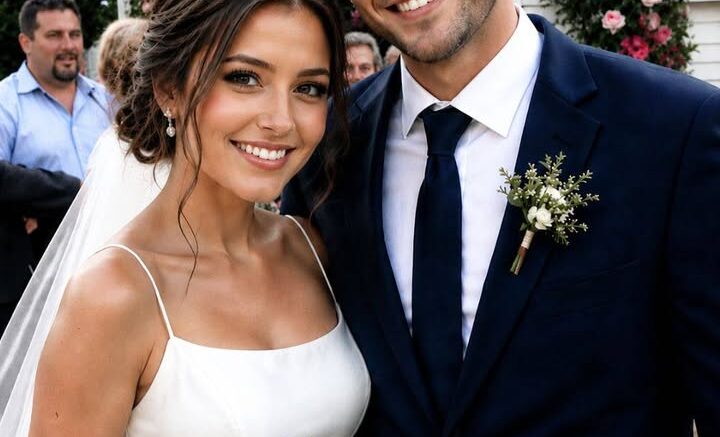
My hands trembled beneath the table, but my heart was firm. Liam was wearing a simple navy suit—the same one he wore to drive my father to high-stakes board meetings and gala dinners. In that moment, the contrast between the two men was blinding: one was defined by his power, the other by his character.
“He has a name,” I said, my voice steady for the first time in my life. I wanted my father to acknowledge the man who had shown me more respect in six years than he had in twenty-seven. I wanted him to see the person, not the position.
My father finally turned his gaze toward Liam, his eyes filled with a dismissive unimpressed glare. He looked at the man who had served him faithfully and saw absolutely nothing of value. It was a look that stripped a person of their dignity in a single stroke.
“No,” he replied, turning his attention back to his meal. “He has a place. And that place is behind the wheel, not at this table.” The finality in his voice was meant to end the conversation, to put me back in my box and Liam back in the driveway.
That was the moment the last thread of my loyalty snapped. I realized that my father’s love was conditional, tied entirely to the preservation of his own ego. If I couldn’t be the daughter he envisioned, I wouldn’t be his daughter at all. I walked out of that house with nothing but the clothes on my back and the man I loved.
Be the first to comment on "Inheritance of the Heart: The Day My Father Returned"