
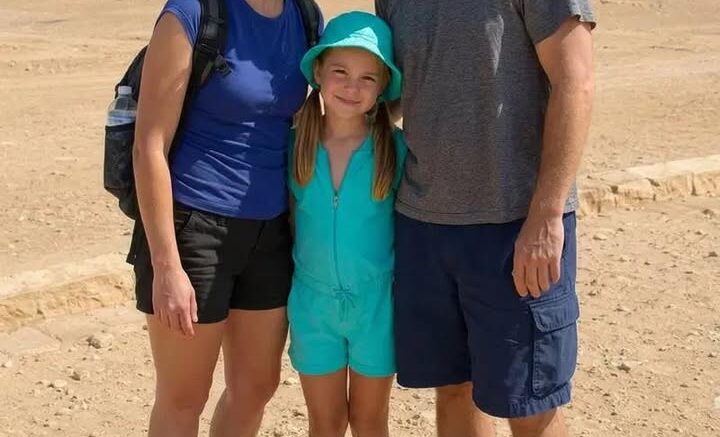
Twenty years ago, my life was defined by the vibrant, chaotic rhythm of Cairo. My husband, an ambitious young reporter, had landed a dream assignment for a major American publication. We were young, full of hope, and eager to embrace the ancient wonders of Egypt. We settled into a sun-drenched second-floor apartment, a place that felt like a sanctuary amidst the bustling city streets.
Our daughter, Tara, was eight years old at the time. She was a child of light and curiosity, with a laugh that could pierce through the thickest desert heat. Beneath our balcony was a lush, walled garden—a private oasis where she spent her afternoons imagining stories among the jasmine vines and palm trees. It was her favorite place in the world, and we felt she was safe within those stone walls.
Gradually, the foreign became familiar. Cairo began to feel like home as we established our routines. My husband spent his days immersed in his writing, while I found a fulfilling position at a local international school. We were building a life of adventure, unaware that the foundation of our happiness was about to be shattered in a single afternoon.
I remember that final morning with haunting clarity. The sun was just beginning to bake the city as I kissed Tara on the forehead. She was already planning her day in the garden, her eyes bright with childhood innocence. My husband waved me off, promising to keep a close watch on her while he finished a pressing deadline in his home office.
When I returned that evening, the golden hour of the Egyptian sunset was marred by the flashing blue and red lights of police cruisers. A cold dread settled in my stomach before I even stepped out of the car. The air felt heavy, silent, and wrong. I ran toward our building, my breath catching in my throat as I saw the grim faces of our neighbors.
My husband met me at the door, his face a mask of pale exhaustion and terror. He told me that Tara had gone down to the garden to play, just as she always did. He had checked on her from the balcony periodically, but when he went down to call her for dinner, the garden was empty. The gate was locked from the inside, yet she was gone.
He claimed he had searched every inch of the property and the surrounding alleys before summoning the authorities. My heart didn’t just break; it felt as though it had ceased to beat entirely. The world around me dissolved into a blur of sirens, questions in Arabic that I could barely understand, and the suffocating realization that my child had vanished into thin air.
For weeks, the search for Tara consumed the city. The Egyptian police conducted exhaustive sweeps, and our neighbors organized search parties that lasted well into the night. Even strangers, moved by our desperation, walked the streets calling her name. We plastered her face on every telephone pole and shop window from Giza to Heliopolis.
Despite the monumental effort, the silence that followed was absolute. There were no witnesses who had seen a struggle, no clues left behind in the dirt of the garden, and no sign of my little girl. It was as if the earth itself had opened up and swallowed her whole, leaving us with nothing but a haunting void.
After a year of living in a state of suspended grief, we could no longer bear the ghosts of Cairo. We packed our belongings and moved back to the quiet suburbs of Ohio, hoping that a change of scenery might dull the ache. But you cannot run away from a loss that has no closure; you simply carry it with you like a heavy, invisible shroud.
Two decades passed in a haze of birthdays that weren’t celebrated and milestones that were never reached. I lived my life in a quiet, functional mourning, never truly giving up hope but losing the strength to expect a miracle. My husband and I grew apart, the weight of the mystery creating a canyon between us that eventually led to our separation.
Last night, I arrived home from a long shift at the hospital, the mundane routine of checking the mail providing a brief distraction from my thoughts. I tossed a stack of bills and advertisements onto the kitchen table, but one piece of mail stopped me in my tracks. It was a postcard, its edges slightly frayed from a long journey.
Be the first to comment on "The Cairo Postcard: A Mother’s Twenty-Year Search for the Truth"