
The hum of the taxi engine faded into the quiet suburban air, a sound I had dreamed of for months during my deployment. I expected the scent of pine needles from the yard and the warmth of a long-awaited embrace. Instead, the first thing that greeted me was my wife Laura’s voice, honey-sweet and performatively tragic, drifting across the lawn toward our neighbor, Mrs. Calder.
“It’s been so difficult,” Laura was saying, her hand resting delicately on her chest. “His mother has developed severe dementia. She’s become aggressive toward herself, poor thing. We’re doing everything we can, but she needs professional intervention.”
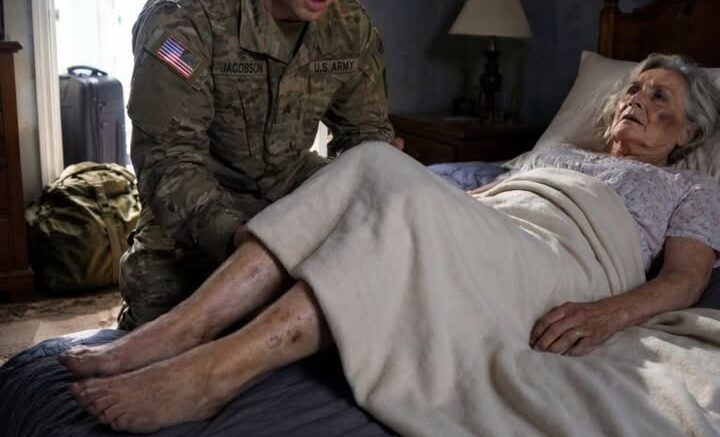
I froze, my duffel bag heavy against my shoulder. The woman she was describing sounded nothing like the vibrant, sharp-witted mother I had spoken to only weeks prior. Before I could process the lie, a thin, desperate cry cut through the afternoon air from the second-story window.
“Daniel! Please, Daniel, don’t leave me in here!” my mother shouted. The sound was muffled, as if she were yelling through a thick barrier, her voice strained with a terror I had never heard before.
Only sixteen hours earlier, I had been strapped into a military transport plane, imagining the simple luxuries of home: hot coffee in my favorite mug, a slice of Mom’s signature lemon pie, and the feeling of Laura running into my arms. The reality was a nightmare draped in a cream-colored sun dress.
Laura spotted me and her expression shifted instantly from mourning to a practiced radiance. She glided toward me, smiling at the neighbors as if she were the hostess of a charity luncheon rather than a woman whose mother-in-law was screaming for help from a locked room.
“She gets so confused, darling,” Laura whispered as she reached me, her voice pitched perfectly for the benefit of the onlookers. “Sometimes she hurts herself. We’ve had to take precautions. I’ve already started the paperwork for her specialized care.”
I looked up at the window. I saw the curtain twitch, a brief flicker of movement before it was jerked shut. My gut twisted with a familiar, tactical instinct. This wasn’t the behavior of a caregiver; this was the behavior of a captor.
When Laura embraced me, her body went rigid for a split second when I asked the only question that mattered: “Why is Mom’s bedroom door locked from the outside, Laura?”
She didn’t blink. “For her own safety, Daniel. She wanders at night. She’s a danger to herself.” She looked at me with wide, pleading eyes, searching for the gullible husband she thought had returned from the front lines.
I smiled back. It was the same smile I used during negotiations in the field—composed, yielding, and entirely false. “Of course,” I replied. “I trust your judgment.”
Deployment had taught me one vital lesson: panic is a flare that announces your position to the enemy. If I was going to uncover the truth, I had to play the role she expected. I kissed her forehead, carried my gear inside, and waited for the stage lights to dim.
Be the first to comment on "The Silent Betrayal: A Soldier’s Homecoming to a Twisted Truth"