
I never truly understood the concept of family, at least not in the way most people describe it. To me, family was a series of empty chairs and unanswered questions. My mother vanished into the ether when I was still an infant, and my father spent the better part of my formative years behind iron bars. The foster care system became my primary educator, and the lessons it provided were harsh: never trust a promise, never get too comfortable, and never expect anyone to stay.
By the time I aged out of the system, I had become a master of self-preservation. I drifted into a small, unremarkable town where the rent was cheap and the manual labor was plentiful. It was a place where one could easily disappear into the background, which was exactly what I intended to do. That was until I crossed paths with Mrs. Rhode, a woman who refused to let anyone remain invisible.
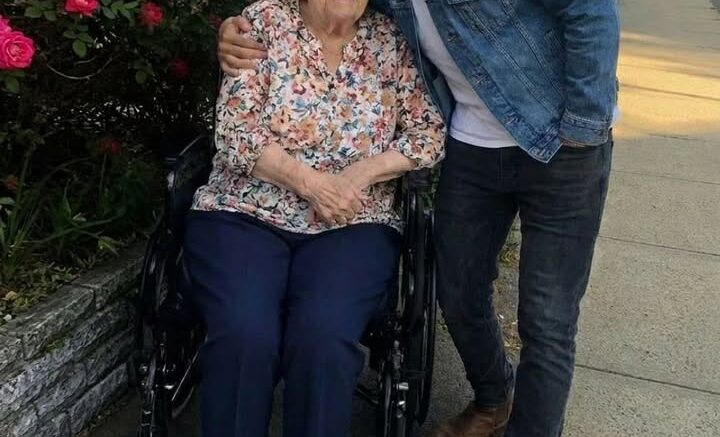
Mrs. Rhode was eighty-five years old, possessing a tongue as sharp as a razor and a stubbornness that could move mountains. She lived in a house that seemed to be held together by memory and sheer will. One afternoon, while I was hauling groceries past her porch, she called out to me in a voice that brooked no argument. “Son, if you want honest pay, come help me. I’ll make it worth your time.”
We sat in her kitchen over cups of tea that were far too bitter for my liking. There, she laid out a proposition with the clinical detachment of a business tycoon. She was dying, she explained, and she was entirely alone. She had no relatives she could rely on and no friends left to lean on. She needed a caretaker, a driver, and a handyman to see her through her final days.
Her offer was blunt: if I committed to taking care of her every need until the end, everything she owned would be mine. The house, the savings, the entire estate would pass to me. Having spent my life with nothing, the prospect of an actual inheritance felt like a mirage. I didn’t hesitate for a moment. “Deal,” I said, shaking her thin, papery hand.
For the next two years, I became the architect of her daily life. I managed her medications, sorting pills into plastic containers with rhythmic precision. I cleared her gutters, changed her light bulbs, and drove her to endless doctor appointments. Through it all, she complained incessantly. She critiqued my parking, my posture, and even the way I folded the laundry.
However, beneath the constant stream of criticism, something shifted. One freezing winter afternoon, she thrust a pair of garishly green, hand-knitted socks into my hands. She told me to take them so my feet wouldn’t freeze, her voice softening just enough to betray a hint of affection. I pretended it was a minor gesture, but in reality, it was the first gift I had received in years.
Our evenings began to stretch longer as we shared stories. She spoke of a life full of both triumph and regret, and slowly, I began to peel back the layers of my own guarded history. For the first time in twenty years, I felt a sense of accountability to another human being. It was no longer just about the money; it was about the fact that someone actually cared if I made it home safely at night.
Then came the morning that changed everything. I entered her house to find her sitting in her favorite armchair, the television still humming with the sounds of an old game show. Her tea sat cold and untouched on the side table. Mrs. Rhode had passed away peacefully in her sleep, leaving behind a silence that felt heavier than any noise she had ever made.
I attended the reading of the will with a mixture of grief and anticipation. I expected the transition to be simple, a final fulfillment of our business arrangement. But as the attorney read the documents, my world began to crumble. The house was bequeathed to a local charity. The entirety of her savings was signed over to the church she hadn’t attended in a decade.
Her jewelry, which she had always called junk, was left to a distant niece who hadn’t called in years. As the attorney finished reading, he looked at me with a blank expression. My name hadn’t been mentioned once. I had been left absolutely nothing. Not a dollar, not a scrap of property, not even a mention of the service I had provided.
I walked out of that office feeling like the biggest fool to ever walk the earth. I had allowed myself to believe in a promise, breaking my own golden rule of self-preservation. I went home, crawled into bed, and slept for nearly twenty-four hours, trying to drown out the bitter taste of betrayal that sat heavy in my throat.
Be the first to comment on "The Legacy of the Dented Lunchbox: A Lesson in True Inheritance"