
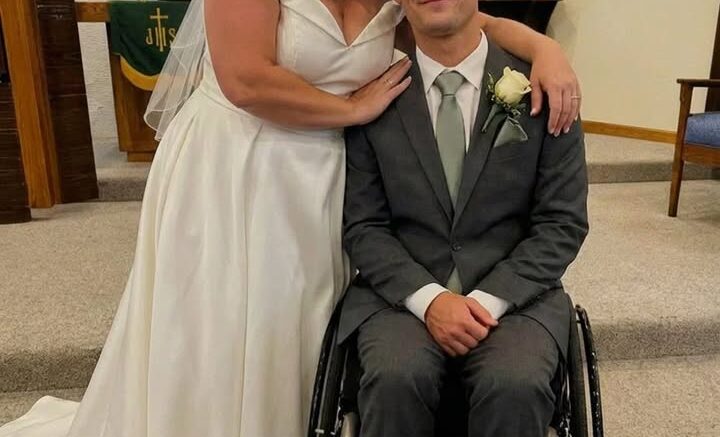
At forty-three, I had become a ghost in my own life. I was the kind of woman who blended into the background of grocery stores and hospital waiting rooms, my face etched with the permanent exhaustion of a mother whose world had stopped turning. Men didn’t notice me, and those who did quickly retreated once they learned the heavy truth I carried in my heart.
My daughter, Lisa, was only nineteen when the accident happened. Since that horrific night, she had been suspended in a coma, a sleeping beauty in a room filled with the rhythmic beeping of machines. She was my entire world, and seeing her motionless day after day was a slow-acting poison to my soul.
The hope I clung to was fragile and expensive. A specialist had approached me with a glimmer of a chance—an experimental treatment that had shown miraculous results in similar cases. But the cost was astronomical, a figure so high it felt like a cruel joke played by the universe.
“If you can’t find the money for this treatment, ma’am,” the doctor had told me with a sympathetic but firm tone, “Lisa may never wake up at all. We are reaching the limit of what standard care can provide.” His words were a death sentence wrapped in professional courtesy.
Desperation became my primary motivator. I took every shift, every grueling job, and every ounce of overtime available. When I saw the advertisement for a private caregiver for Adrian Vance, the orphaned heir to the Vance corporate empire, I applied with a prayer on my lips.
Adrian was only twenty years old, a young man who should have been conquering the world. Instead, a tragic car crash that claimed the lives of both his parents had left him paralyzed from the waist down, confined to a wheelchair and a sprawling, lonely mansion.
Despite his immense wealth and the bitterness that often accompanies such a sudden loss of mobility, Adrian was never cruel. He possessed a quiet dignity that commanded respect, even when he was at his most vulnerable. He was a prisoner in a golden cage, yet he never lashed out at his jailers.
“Don’t call me sir,” he told me during my first week, his voice soft but resolute. I had just served him a bowl of soup that I’d slightly scorched in my nervousness. “You make me feel like an antique vase that everyone is afraid of breaking.”
I couldn’t help but laugh, a sound that felt foreign and rusty in my throat. It was the first time I had genuinely smiled in months, and for a brief moment, the weight on my chest seemed to lighten. We were two broken people navigating a house full of shadows.
For the next six months, my life revolved around his needs. I helped him dress, I meticulously changed his bandages, and I sat in the darkness with him when his migraines became unbearable, reading poetry until his breathing evened out into sleep.
We formed a bond that transcended the typical patient-caregiver relationship. We spoke of books, of the stars, and of the things we missed most about the lives we had lost. I never told him the full extent of my daughter’s condition, fearing it would sound like I was begging for his pity.
Then came a rainy Thursday that changed everything. I was in the kitchen, frantically scrubbing a coffee stain off my sleeve, when I heard the hum of his electric wheelchair. He stopped in the doorway, his expression more serious than I had ever seen it.
Be the first to comment on "The Millionaire’s Vow: A Wedding Night Revelation"