
I was a delivery driver perpetually living on the edge of financial collapse. Every morning, I would wake up to a stack of medical bills that seemed to grow faster than my meager earnings could ever cover. My mother was battling a chronic illness, and the cost of her specialized medications was a weight that threatened to crush us both.
Every delivery I made was a race against time and poverty. I lived in a state of constant anxiety, wondering if this month would be the one where we finally lost everything. It was during one of these desperate shifts that a man approached me with a proposition that felt like something out of a dark movie.
He was polished, wealthy, and clearly burdened by a different kind of problem. He explained that his elderly mother was living in a specialized nursing facility, suffering from advanced dementia. On her lucid days, she would tell the staff and visiting relatives that her son never came to see her—a truth that was damaging his social standing.
To him, his mother’s loneliness was a PR problem that needed to be managed. He offered me five hundred dollars a week just to show up, sit by her bed, and pretend to be the devoted son he refused to be. It was a cold, transactional arrangement designed to silence the whispers of his extended family.
I should have walked away. The moral implications of deceiving a vulnerable woman were staggering, and the weight of the lie felt heavy before I even spoke a word. But then I thought about my own mother, shivering in our drafty apartment because I couldn’t afford to fix the heater and pay for her insulin.
I took the money. I told myself it was just a job, a performance no different from an actor on a stage. I convinced myself that as long as she felt loved, the source of that love didn’t matter. I was wrong, of course, but desperation has a way of silencing the conscience.
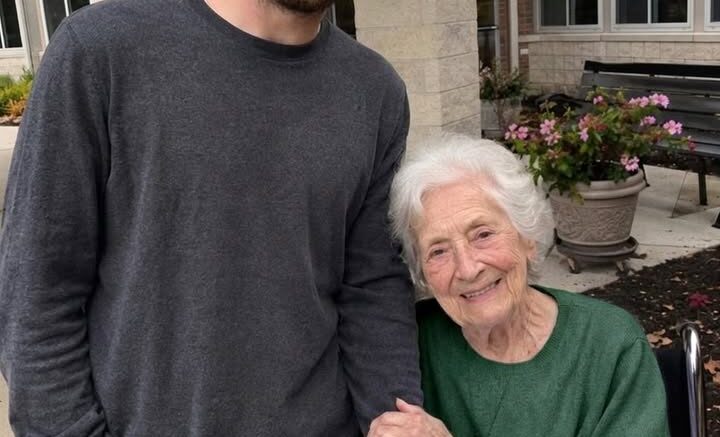
The first time I walked into her sunlit room, my heart was hammering against my ribs. I expected her to see right through me, to scream for the nurses or demand to know who this stranger was. Instead, the moment she saw me, her entire face transformed into a radiant beam of joy.
\”There you are,\” she whispered, her voice trembling with a mixture of relief and adoration. She reached out a frail, paper-thin hand toward me, and instinctively, I took it. In that moment, I didn’t feel like a clever con artist; I felt like the lowest person on earth.
I expected the guilt to fade as the weeks went by, but it only intensified. She was a woman of incredible grace, even as her mind drifted through the fog of her condition. Some days she called me by her son’s name, and other days she used names I didn’t recognize, likely figures from a past I would never know.
Regardless of what she called me, her concern was always directed outward. She would hold my hand tightly and ask if I was eating enough, if I was getting enough sleep, and if the world was being kind to me. She worried about my happiness with a ferocity that caught me completely off guard.
Nobody had asked me those questions in years. As I struggled to keep my own life afloat, I had forgotten what it felt like to be the object of someone’s unconditional concern. Ironically, I was being paid to provide comfort to her, yet I was the one finding a strange sort of solace in her presence.
As the months passed, the dynamic shifted. The five hundred dollars a week, which had once been my sole motivation, became an afterthought. I found myself stopping at the florist to pick up her favorite yellow roses and searching the local shops for the specific dark chocolates she loved.
Be the first to comment on "The Paid Imposter: A Final Request from a Mother’s Heart"