
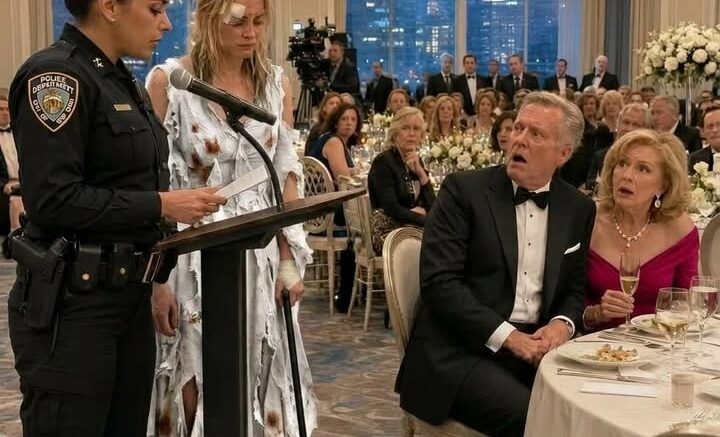
The impact of the collision on I-5 was a deafening roar of twisting metal and shattering glass, a violent crescendo that ended in an eerie, ringing silence. As the smoke cleared and the reality of the wreckage settled around me, my first instinct wasn’t fear for my life, but a desperate need for the man who had always been my North Star. I reached for my phone with trembling fingers, my vision blurred by the blood trickling from a scalp wound, and sent a frantic message to my father from the back of the ambulance.
I waited for the response that would tell me everything would be alright, expecting him to drop whatever he was doing to rush to the emergency room. Instead, the screen lit up with a cold, clinical dismissal that felt more painful than the fractured ribs pressing against my lungs. “I’m having lunch with Charlotte. I can’t just walk out. Call an Uber,” the message read, a digital execution of the bond I thought we shared.
At twenty-eight years old, I had spent the better part of a decade serving as the invisible foundation of my father’s prestigious architecture firm. Tyler Irwin was a name synonymous with innovation and grace, a man who graced the covers of industry magazines and accepted awards with a practiced, humble smile. But behind the scenes, I was the one who breathed life into his sketches, the one who stayed up until dawn fixing his structural errors and navigating the complex bureaucracy of city permits.
I made Tyler Irwin look like a genius, and in return, he treated me as an indispensable tool—a piece of office equipment that was expected to function without maintenance or emotion. The realization that he valued a midday meal with my stepmother over my survival was a tectonic shift in my reality. As I sat in that sterile hospital room, the physical pain became secondary to the clarity that was beginning to harden in my chest.
Officer Hayes, the responding officer who had stayed by my side out of a sense of duty my own father lacked, saw the message on my screen. Her expression shifted from professional concern to a cold, simmering fury. She reached for her own phone, attempting to contact him twice to inform him of the severity of the accident, but he ignored both calls, likely annoyed that his lunch was being interrupted by unknown numbers.
I tried to call him one last time, my voice barely a whisper, hoping that perhaps he hadn’t understood the gravity of the situation. He declined the call before it could even ring fully. In that moment, something vital within me simply went quiet; the daughter who would have done anything to protect his legacy ceased to exist, replaced by a woman who finally saw the man for who he truly was.
I didn’t cry, and I didn’t beg for his attention anymore. I sat in the dim light of the observation ward, watching the clock tick by, realizing that I had been a ghost in my own life, haunting the halls of Irwin & Associates for the benefit of a man who wouldn’t even order me a ride, let alone come to my side. The silence of the hospital was broken only by the rhythmic beeping of monitors, a steady pulse of a new, colder resolve.
Four hours later, my phone began to buzz incessantly, but the tone of the communication had shifted dramatically. It wasn’t a follow-up to see if I had made it home, nor was it an apology for his earlier callousness. It was a barrage of messages from the office, frantic and demanding, regarding the finalization of the Harbor District project—a fifteen-million-dollar deal that represented the pinnacle of my father’s career.
They needed the final encrypted files, the ones only I had access to, and the administrative passwords that I had set up to ensure the security of our intellectual property. The irony was staggering: the man who could not be bothered to leave a restaurant for his injured daughter now desperately needed her to save his empire. He was terrified that a delay would sour the investors who were waiting for the big reveal at the gala.
My father’s team sent message after message, claiming I was “delaying progress” and being “unprofessional” by not responding to their technical queries. They had no idea I was sitting in a hospital gown, my body a map of bruises and stitches. To them, I was just a cog that had stopped turning at a critical moment, an inconvenience to the flow of capital and prestige.
I realized then that my father’s entire reputation was a house of cards, and I was the only thing holding it against the wind. The designs they were so eager to present weren’t his; they were the result of my blood, sweat, and the years of my life I could never get back. He had built a kingdom on my silence, assuming I would always be there to catch him when he stumbled.
As Officer Hayes prepared to leave, she mentioned she would be attending the Four Seasons gala that weekend to represent the department’s community outreach program. It was the same gala where my father planned to toast his success. A plan began to form, not out of a desire for petty revenge, but out of a necessity for the truth to finally be heard by the people who worshipped a false idol.
Be the first to comment on "The Price of Indifference: Why I Let My Father’s Empire Crumble"