
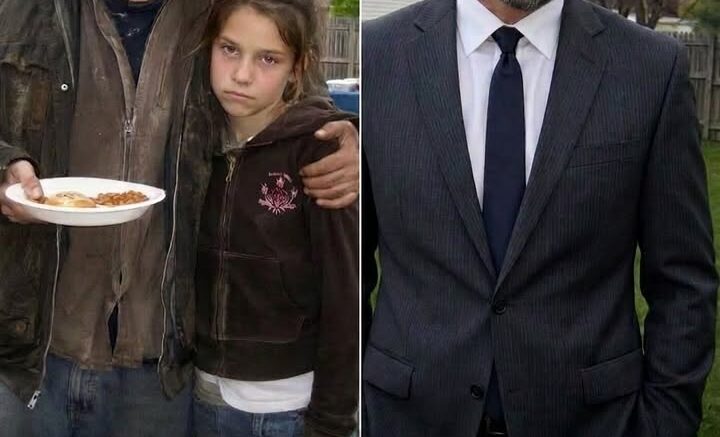
For two decades, our lives revolved around a rhythm dictated by three plates. Every afternoon, my mother would stand in our cramped kitchen, the scent of seasoned chicken or vegetable stew filling the air, and meticulously pack three distinct meals. Two remained on our chipped, laminate kitchen table for us, while the third was carefully placed into whatever spare takeout container we had managed to save.
That third meal was always for Victor. He was a man who lived in a makeshift shelter constructed of pallets and heavy tarps, tucked away in the overgrown brush just behind our rental house. To my adolescent eyes, he was a shadow, a constant reminder of the poverty we were already struggling to escape, and I grew to despise his presence.
My resentment wasn’t born out of a lack of empathy for the unhoused, but rather from a place of profound scarcity. We were poor—painfully so. I spent my middle school years walking in sneakers held together by silver duct tape, and I vividly remember the winter the electricity was cut off twice, leaving us to huddle under piles of moth-eaten blankets.
It felt like a betrayal. I watched my mother pour her limited resources and her dwindling energy into a man who lived in the dirt, treating his hunger as though it were a sacred obligation that superseded our own comfort. To me, every bite he took was a bite she was stealing from her own child.
One particularly grueling afternoon, after a day of being bullied for my worn-out clothes, I finally snapped. As she reached for the plastic container to walk it out to the fence, I shouted, “Maybe if you stopped feeding strangers, we wouldn’t have to live like this! Maybe we could actually afford to be normal!”
I expected her to cry or to offer a soft, maternal explanation. Instead, my mother exploded with a ferocity I had never seen. Her face turned a shade of crimson that frightened me, and her voice trembled with a terrifying authority as she pointed a finger at my chest.
“Don’t you ever dare say that again,” she hissed, her eyes burning with a secret fire. “You have no idea what it means to carry a debt, and you have no idea what that man has sacrificed. You will show him respect, or you will leave this house.”
Stunned into silence, I retreated. The subject became a forbidden zone, a border wall between us that grew taller as the years passed. I eventually moved away for college and then work, and our relationship stabilized only because I stopped asking questions about the man in the woods.
Victor remained a fixture of the landscape, a permanent ghost in the backyard. Even as my mother grew older and the house grew quieter, the third meal was always prepared. It was a ritual that seemed as immutable as the rising sun, until the day the doctor delivered the news that changed everything.
Cancer is a cruel thief; it stole her strength, her voice, and finally, her stature. She became small and fragile, a delicate bird nesting in a hospital bed set up in the living room. Throughout her decline, her concern never wavered from the backyard.
Two weeks before she drew her final breath, she gripped my wrist with a surprising, skeletal strength. Her eyes were clouded but intense as she pulled me close to her face. “Promise me,” she whispered, her voice cracking like dry parchment. “Promise me you’ll keep feeding Victor. No matter what happens, do not let him go hungry.”
I wanted to scream, to ask why this stranger mattered more than her own peace in her final hours. But looking at her, I couldn’t find the heart to lie or to argue. I gave her my word, a hollow promise I intended to keep just long enough to honor her memory.
Be the first to comment on "The Silent Guardian: My Mother’s Final Secret Behind the Garden Gate"